
For insurance surveyors & loss adjusters
Claim-ready evidence, captured the same day
After a named storm the volume arrives all at once. Aerial capture plus AI-drafted findings lets you document far more properties per day without losing consistency between them.
- 3 free reports to start
- No subscription
- From £7.40 per report
- White-label
Consistent, dated, annotated evidence with a severity grade on every finding — the format that stands up when a claim is challenged.
Tuned for what you look at
Your account runs the insurance detection profile, so the AI reports on the things your clients ask about.
- Hail impact bruising and pitting
- Wind-lifted and displaced tiles and slates
- Storm-broken guttering, fascia and soffit
- Water ingress paths and staining visible from above
- Pre-existing wear distinguished from event damage where visible
What it does for the business
More properties per day
No ladders, no scaffold. Fly, upload, review, publish — then move to the next address.
Consistent reporting
Every report uses the same categories, severity scale and structure, whoever captured it.
Defensible record
Original photograph, annotation position, severity and date retained on every single finding.
Faster settlement conversations
A policyholder who can see the damage circled argues far less about the outcome.
Typical charge to your client
Charged within your existing inspection fee; the credit cost is typically under 5% of it.
Four steps, about ten minutes
Step 1
Upload your photos
Any drone, phone or camera images.
Step 2
AI reviews each one
Defects circled, graded, described.
Step 3
You approve
Edit, reject or add anything by hand.
Step 4
Send in your name
Your logo, your colours, your domain.
See it in insurance' branding
Add your company name, colour and logo. Nothing is saved or uploaded — it all runs in your browser.
Make it yours
Like what you see?
Create your trade account and we'll carry this branding straight through. Your first 3 reports are on us.
Start free with 3 reportsYour Company
Roof condition report
Example Property, Glasgow G43
Prepared for Mr & Mrs Client
Summary of findings
The covering is generally sound for its age, but two issues need attention this season: a blocked gutter run that is already discharging down the rear wall, and eroded pointing to the chimney stack. Ridge bedding has failed along the front elevation and should be addressed within the next twelve months. The remaining findings are maintenance items that can be handled at the same visit.
1
Critical
2
High
3
Moderate
3
Low
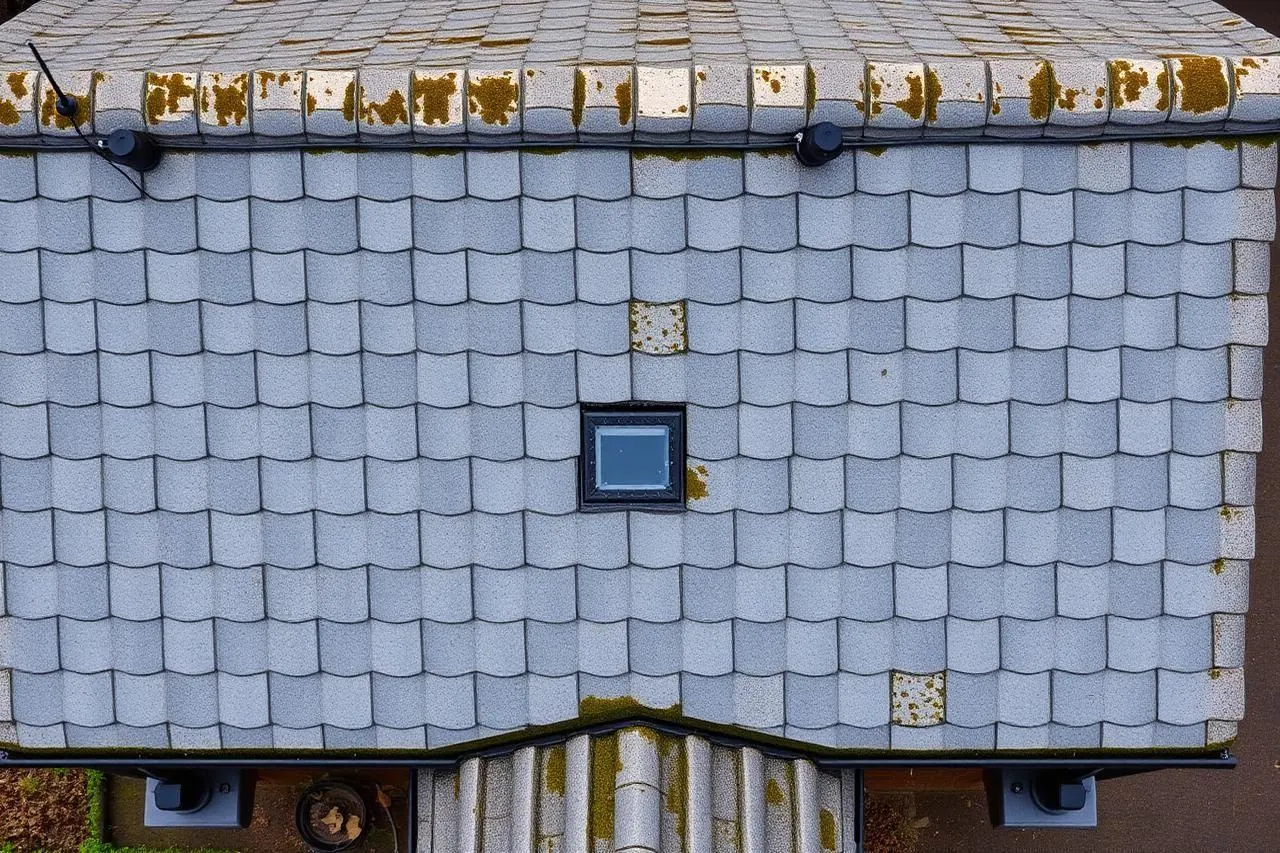
Front elevation — main roof slope and ridge
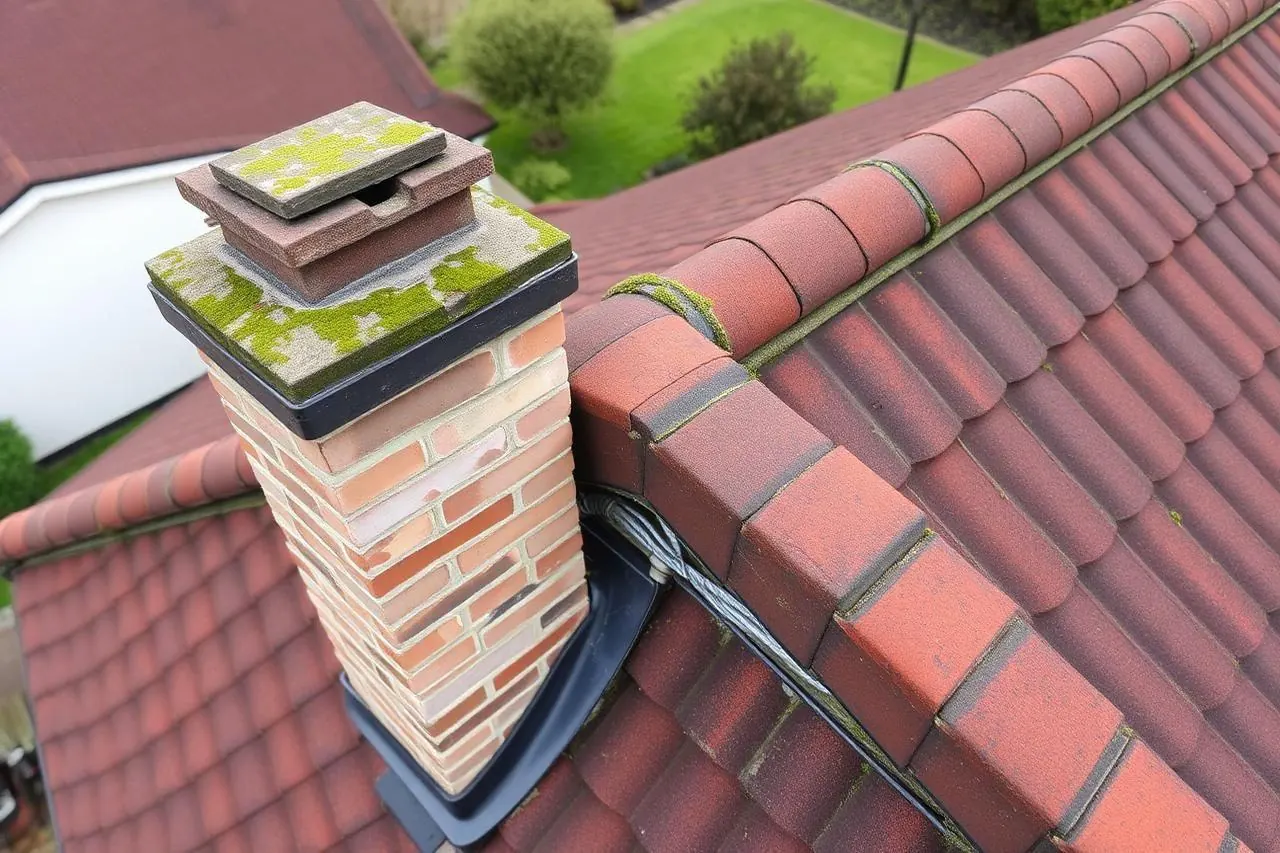
Chimney stack — north elevation and hip junction
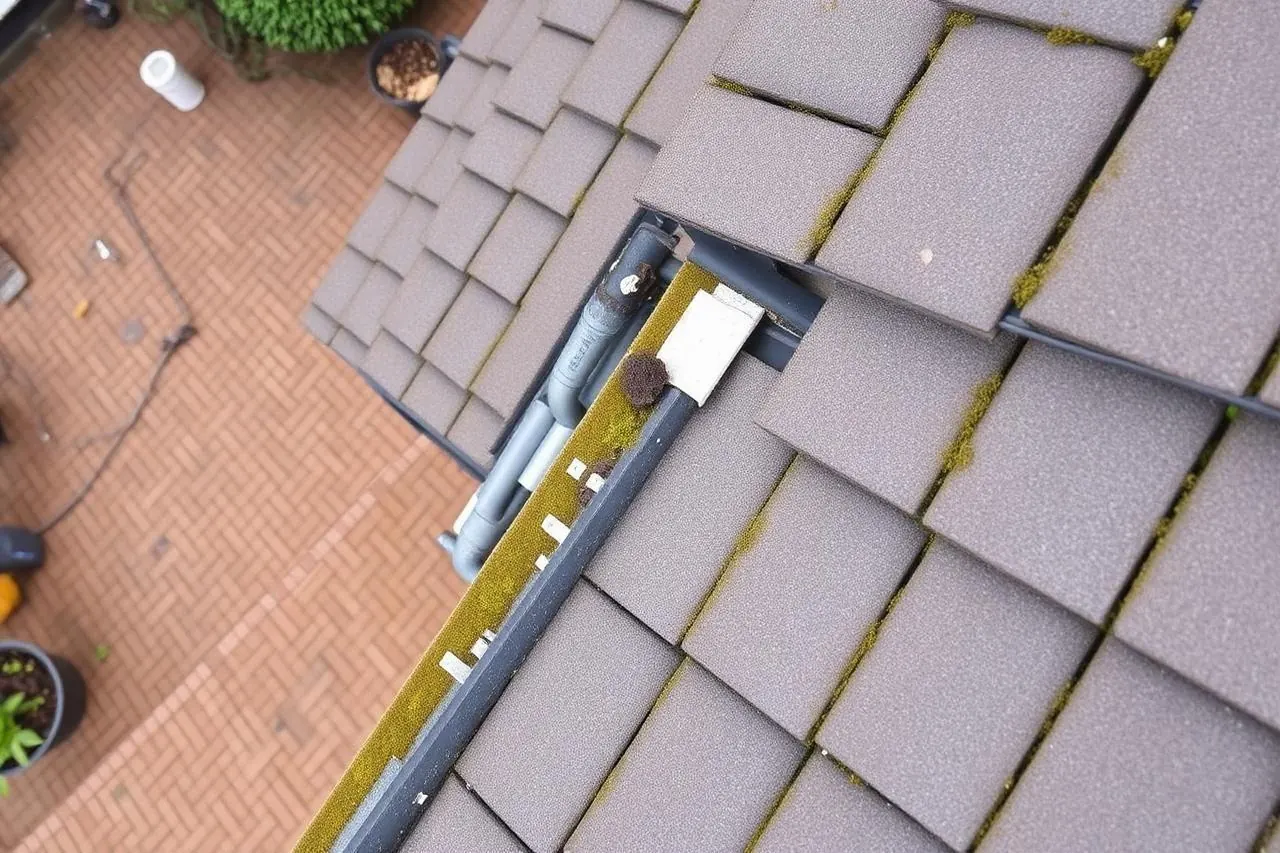
Rear right elevation — gutter run and downpipe head
- 1
Failed ridge bedding
Ridge & hip · HighMortar bedding along the ridge line has cracked and washed out in several places, leaving the ridge tiles held largely by their own weight. Moss growth in the open joints is holding moisture against the bedding.
Recommended: Re-bed the full ridge run in fresh mortar, or convert to a dry-fix ridge system for a longer-lived repair.
- 2
Displaced tile beside rooflight
Tiles / slates · ModerateA tile adjacent to the rooflight has lifted at its lower edge and is no longer seated on the batten, exposing the underlay to wind-driven rain.
Recommended: Re-seat and clip the tile, and check the rooflight flashing while access is set up.
- 3
Moss build-up on lower courses
Moss & debris · LowOrganic growth is established across the lower tile courses and at the eaves, retaining moisture on the covering and shedding debris into the gutter.
Recommended: Soft-brush the growth away and treat with a roof-safe biocide. Avoid pressure washing, which strips the tile surface.
- 4
Eroded pointing to stack
Chimney · HighMortar joints across the stack have weathered back and are open in several courses. Water entering the masonry here typically shows up internally as staining on the chimney breast.
Recommended: Rake out and re-point the stack, then re-seal the cap while scaffold or a tower is in place.
- 5
Lifted flashing at stack base
Flashing / lead · ModerateThe lead at the base of the stack is no longer dressed tight to the tile profile, leaving a gap at the upstand that will take water in driving rain.
Recommended: Re-dress the lead, re-wedge into the raked joint and point with lead sealant.
- 6
Moss to hip and ridge joints
Ridge & hip · LowMoss is establishing in the mortar joints along the hip and ridge run. Not urgent, but it accelerates bedding failure if left for several winters.
Recommended: Clear growth from the joints and monitor at the next inspection.
- 7
Blocked gutter run above downpipe
Guttering · CriticalThe gutter is silted with moss and debris to roughly half its depth immediately above the downpipe outlet. Standing water is already visible along the channel, and overflow at this point runs directly down the wall below.
Recommended: Clear the full run and the downpipe, flush with water to confirm flow, and check the wall below for existing damp penetration.
- 8
Bracket pulling from fascia
Guttering · ModerateOne gutter bracket has worked loose and the section has dropped slightly, reversing the fall over about a metre of the run.
Recommended: Re-fix the bracket into sound timber and re-level the section to restore the fall.
- 9
Chipped tile at verge
Tiles / slates · LowA tile at the verge has a chipped lower corner. Cosmetic at present with no exposed underlay behind it.
Recommended: No action required now; replace if the chip progresses into a crack.
Example property imagery: Top-down overview — example property, Glasgow G43. Findings shown are from a real survey format; the branding is yours.